

Sleep and Mental Health: Why Rest Is More Essential Than You Think?
There is a version of productivity culture that treats sleep as the last thing to protect and the first thing to sacrifice. Five hours is enough. I will sleep when I am dead. Successful people wake at four. These ideas circulate with enough confidence that many people have quietly accepted sleep deprivation as an unavoidable feature of a full and ambitious life. The research disagrees. Strongly, consistently, and across decades of accumulated evidence.
Sleep and mental health are not loosely associated. They are deeply and bidirectionally intertwined in ways that mean you cannot meaningfully address one without attending to the other. Poor sleep makes every mental health condition worse. Every major psychiatric diagnosis, including depression, anxiety, bipolar disorder, schizophrenia, and PTSD, is associated with significant sleep disturbance. And the relationship runs in both directions: inadequate sleep in people with no prior mental health diagnosis measurably increases the risk of developing one.
Matthew Walker, a neuroscientist and sleep researcher at UC Berkeley whose work has done more than almost anyone else to communicate the science of sleep to a general audience, puts it plainly: the shorter your sleep, the shorter your life. He is not speaking loosely. He is summarizing a body of evidence that links chronic sleep deprivation to heart disease, cancer, Alzheimer’s disease, immune suppression, metabolic disorders, and serious mental health decline. This post covers what sleep actually does for the brain, what sleep deprivation mental health effects look like in real life, and what genuinely works when it comes to sleeping better.
What Your Brain Is Actually Doing While You Sleep
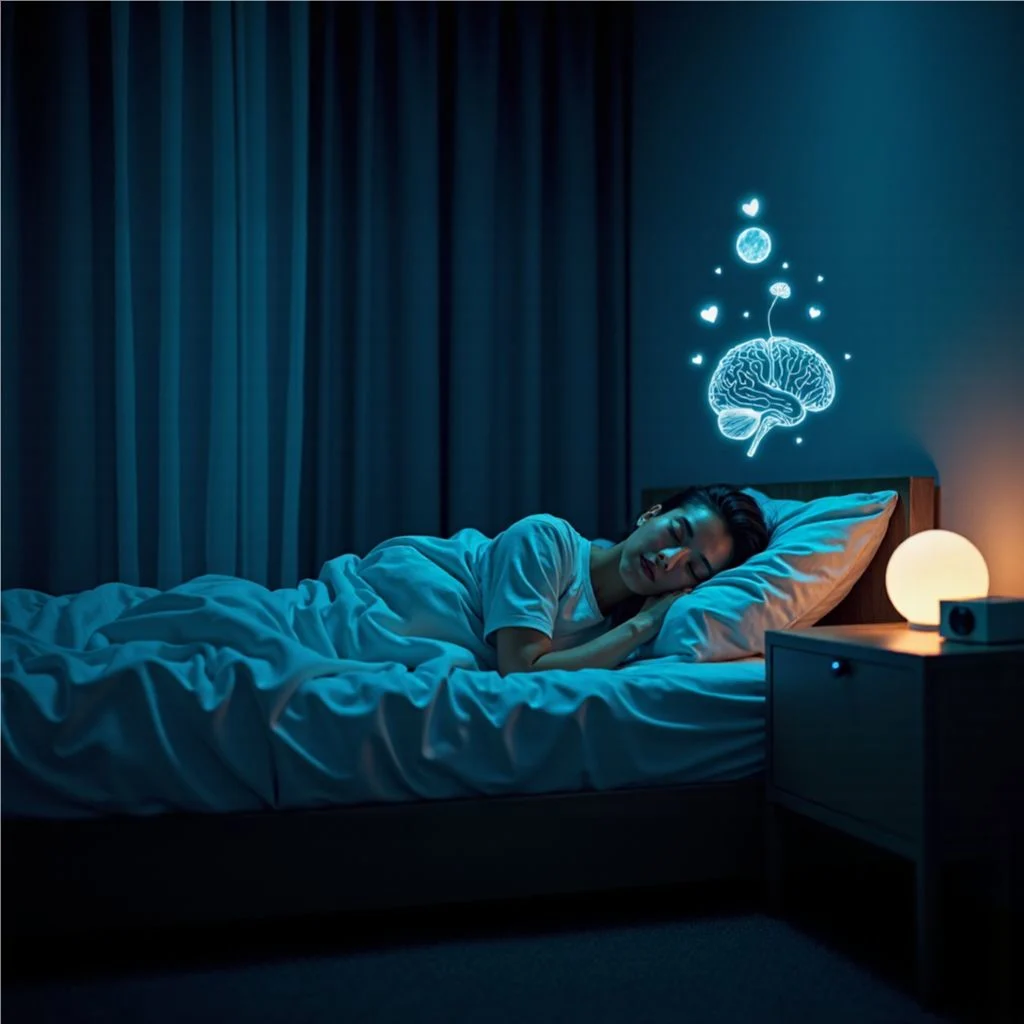
Sleep looks passive from the outside. The body is still, the eyes are closed, consciousness is suspended. What is happening inside the brain during this time is anything but passive. Sleep is one of the most metabolically active periods in the brain’s daily cycle, and its functions are so essential that no amount of caffeine, motivation, or willpower can replicate them during waking hours. The glymphatic system is one of the most important discoveries in neuroscience of the past decade. Identified by researcher Maiken Nedergaard at the University of Rochester in 2013, the glymphatic system is essentially the brain’s waste clearance mechanism. During sleep, particularly during deep slow-wave sleep, cerebrospinal fluid flows through the spaces between neurons in a pulsing pattern that flushes out metabolic waste products accumulated during the day. Among the most significant of these waste products is amyloid beta, the protein that accumulates into the plaques associated with Alzheimer’s disease. The glymphatic system clears amyloid beta during sleep at a rate significantly higher than during waking. Chronic sleep deprivation allows it to accumulate instead.
Beyond waste clearance, sleep is when the hippocampus transfers newly encoded memories into long-term cortical storage, when the brain consolidates emotional experiences and regulates their charge, when growth hormone is secreted for cellular repair, and when the immune system conducts its most active surveillance and repair operations. These are not optional background processes. They are the maintenance work that makes the next day’s functioning possible, and none of them can be deferred indefinitely without cost.
How Sleep Deprivation Affects Mental Health
Sleep Deprivation and Emotional Regulation
One of the most immediate and well-documented sleep deprivation mental health effects is the impairment of emotional regulation. The amygdala, the brain’s threat-detection and emotional-response center, becomes significantly more reactive after even one night of poor sleep. Research from Matthew Walker’s lab at UC Berkeley used neuroimaging to show that sleep-deprived participants showed 60 percent greater amygdala reactivity to negative emotional stimuli compared to well-rested participants. Critically, the prefrontal cortex, which normally modulates the amygdala’s responses, showed reduced functional connectivity with it after sleep deprivation, removing the brake from the brain’s emotional accelerator.
In practical terms this means that a person who has not slept adequately is operating with a brain that is simultaneously more reactive to perceived threats, less able to regulate those reactions, and less capable of the kind of rational perspective-taking that would normally prevent minor frustrations from becoming significant emotional events. The irritability, disproportionate emotional responses, and difficulty maintaining patience that people often attribute to stress or personality are frequently, in large part, a product of inadequate sleep.
Lack of Sleep and Anxiety
Lack of sleep and anxiety are locked in a relationship as circular and self-sustaining as any in mental health. Insufficient sleep activates the same threat-monitoring and worry circuits that underlie anxiety disorders. An anxious, sleep-deprived brain generates more catastrophic predictions, attaches more importance to minor uncertainties, and is less capable of tolerating ambiguity. Sleep deprivation increases activity in the anticipatory anxiety regions of the brain, meaning that a person who has not slept well spends more of the following day in a state of anticipatory dread about things that may not happen.
The reverse relationship is equally well-established. Anxiety disrupts sleep. Racing thoughts, physical tension, and the hyperarousal that characterizes anxiety disorders interfere with sleep onset and maintenance in ways that are both obvious and neurologically specific. Cortisol and sleep deprivation are connected here: elevated cortisol from sustained anxiety suppresses the natural evening decline in arousal that normally prepares the body for sleep, keeping the system in a state of vigilance when it should be winding down. The result is that anxious people sleep poorly, poor sleep makes them more anxious, and the cycle continues without intervention.
Sleep and Depression: The Closest Connection
Sleep and depression share the most extensively documented relationship in psychiatry. Insomnia is present in approximately 75 percent of people with major depressive disorder, and it is not merely a symptom. Research has established that insomnia is a significant predictor of depression onset in people with no prior history of the condition. A large longitudinal study published in JAMA Psychiatry found that people with chronic insomnia had a substantially elevated risk of developing major depression over a ten-year follow-up period, independent of other risk factors. The relationship is bidirectional but asymmetric. While depression causes insomnia, insomnia causes depression more reliably and through more direct biological mechanisms. Disrupted sleep impairs serotonin regulation, reduces neuroplasticity in the hippocampus, elevates inflammatory markers, and disrupts the emotional memory processing that occurs during REM sleep. Each of these mechanisms contributes independently to the neurobiological state associated with depression. Treating insomnia in depressed patients produces significant improvements in depression severity, and in some studies treating the insomnia first produced better outcomes than initiating antidepressant medication without addressing the sleep.
REM Sleep and Emotional Processing
REM sleep and emotions are connected through one of the most fascinating and practically important functions of the sleep cycle. During REM sleep, the brain reactivates emotional memories but does so in a neurochemical environment stripped of norepinephrine, the stress hormone most associated with emotional intensity. This unique combination allows the brain to process and integrate emotionally charged experiences, essentially replaying them in a less threatening context and gradually reducing their emotional charge.
Walker describes REM sleep as overnight therapy, and the description is neurologically apt. People who have adequate REM sleep consistently show less emotional reactivity to previously distressing memories the following day. People deprived of REM sleep show persistent emotional reactivity and have difficulty separating the emotional content of a memory from the memory itself. This is one of the reasons why PTSD, which disrupts REM sleep specifically, involves the inability to process trauma in the way that normal sleep would allow. The emotional raw material is present but the overnight processing mechanism is unavailable.
Why So Many People Sleep Poorly and Do Not Know It
One of the most significant complications in the relationship between poor sleep and mental health is that sleep deprivation impairs the ability to accurately assess one’s own cognitive and emotional state. Research consistently shows that chronically sleep-deprived individuals dramatically underestimate their own impairment. They report feeling fine, or at least acceptably functional, while objective measures of their reaction time, cognitive performance, and emotional reactivity show significant deterioration. This creates a situation in which the people most affected by inadequate sleep are also the least likely to recognize sleep as the source of the problem. The irritability gets attributed to stress. The poor concentration gets attributed to aging or distraction. The disproportionate emotional responses get attributed to personality. The connection back to sleep is rarely made, partly because the culture actively discourages it and partly because the impaired brain is genuinely less capable of the self-observation required to make it.
Insomnia and mental health interact here in a specific way. Insomnia as a clinical condition involves not just difficulty sleeping but cognitive preoccupation with sleep, a heightened monitoring of the body for signs of wakefulness, and the development of conditioned arousal in response to the bed environment itself. The anxiety about not sleeping becomes a cause of not sleeping. Many people who report lying awake for hours have developed this conditioned response without realizing it, and standard advice about sleep hygiene does not address the cognitive component that maintains the insomnia.
How Much Sleep Adults Actually Need
How much sleep do adults need is a question the research answers with more consistency than the cultural conversation around it suggests. For adults between 18 and 65, the evidence supports seven to nine hours as the range within which the brain and body can perform their essential maintenance functions. Below seven hours, measurable impairments in cognitive function, immune response, emotional regulation, and metabolic health begin to accumulate. Below six hours, those impairments become significant. Below five hours, they become severe.
The idea that some people are naturally short sleepers who function optimally on five or six hours is real but extremely rare. Research from the University of California San Francisco identified a gene mutation associated with efficient sleep that occurs in less than three percent of the population. For the remaining 97 percent, the belief that they can thrive on minimal sleep is a cognitive illusion produced by the impaired self-assessment that sleep deprivation creates. They are not functioning well on five hours. They have simply forgotten what functioning well actually feels like. Weekend catch-up sleep is a partial solution to a structural problem. Research shows that extending sleep on weekends does partially recover some cognitive functions that were impaired during the week. It does not, however, fully reverse the metabolic, immune, and cardiovascular effects of sustained sleep restriction, and it does not appear to protect against the long-term mental health consequences of chronically insufficient weekday sleep.
Sleep Hygiene Tips That Are Actually Based in Evidence
Sleep hygiene as a concept has been diluted by overuse to the point where it risks meaning very little. The original clinical meaning is precise and evidence-based: a set of behavioral and environmental practices that support the brain’s natural sleep regulation systems rather than fighting against them. The following are not generic wellness suggestions. They are practices with documented effects on sleep onset, sleep quality, and daytime mental health outcomes.
Consistency as the Foundation
Going to bed and waking at the same time every day, including weekends, is the single most effective behavioral intervention for improving sleep quality according to sleep science research. The body runs on a circadian rhythm governed by the suprachiasmatic nucleus in the hypothalamus, which is calibrated to environmental light and social cues but performs optimally with behavioral regularity. Irregular sleep timing disrupts circadian rhythm in ways that impair both sleep quality and daytime mental functioning independently of total sleep time. A consistent schedule maintained over two to three weeks produces measurable improvements in sleep onset latency, sleep efficiency, and morning mood.
Managing Light and Temperature
Light is the primary zeitgeber, or time-giver, for the circadian rhythm. Morning light exposure within an hour of waking anchors the circadian clock and improves sleep onset timing in the evening. Evening light exposure, particularly from screens emitting blue-wavelength light, suppresses melatonin production and delays sleep onset. The practical implication is straightforward: get natural light in the morning and reduce artificial light in the two hours before bed. Dimming overhead lights and using warm-toned lighting in the evening produces measurable improvements in melatonin timing and sleep quality.
Core body temperature follows the circadian rhythm, dropping in the evening to facilitate sleep onset and rising in the early morning to facilitate waking. A cooler sleeping environment, between 65 and 68 degrees Fahrenheit for most people, supports this natural temperature drop and significantly improves deep sleep duration. Research from the Netherlands Institute for Neuroscience found that temperature-regulating sleep suits that cooled the body produced improvements in slow-wave sleep comparable to some sedative medications, without their cognitive side effects.
The Cognitive Component: Quieting the Mind Before Bed
How to improve sleep quality for people whose primary obstacle is a mind that will not stop involves addressing the cognitive arousal that prevents sleep onset. Writing a specific to-do list for the following day, as established by research at Baylor University, offloads the planning function from working memory and reduces pre-sleep cognitive activity. Progressive muscle relaxation, which involves systematically tensing and releasing muscle groups through the body, reduces the physical tension that accompanies pre-sleep anxiety and has demonstrated efficacy in clinical trials for insomnia treatment.
- Keep the bedroom for sleep and intimacy only. Working, eating, and watching television in bed trains the brain to associate the bed environment with wakefulness and activity, undermining the conditioned sleepiness that should be triggered by lying down.
- Avoid caffeine after 2 PM. Caffeine has a half-life of approximately five to seven hours, meaning that a coffee consumed at 3 PM still has half its stimulant effect at 8 or 9 PM, precisely when the brain should be beginning its natural wind-down.
- Limit alcohol before bed. Alcohol produces sedation initially but fragments sleep in the second half of the night, suppresses REM sleep significantly, and reduces sleep quality despite reducing the time it takes to fall asleep. The sleep produced under the influence of alcohol is physiologically less restorative.
- Build a consistent wind-down routine of 30 to 60 minutes before bed. The brain requires a transition period from alert waking activity to sleep readiness. Activities that are genuinely low-stimulation, including reading physical books, light stretching, and quiet conversation, support this transition in ways that high-stimulation activities cannot.
- If you cannot sleep after 20 minutes, get out of bed. Lying awake in bed builds conditioned arousal that makes subsequent nights harder. Going to another room and doing something quiet until sleepiness returns, then returning to bed, gradually breaks the association between wakefulness and the bed environment.
- sleep significantly, and reduces sleep quality despite reducing the time it takes to fall asleep. The sleep produced under the influence of alcohol is physiologically less restorative.
- Build a consistent wind-down routine of 30 to 60 minutes before bed. The brain requires a transition period from alert waking activity to sleep readiness. Activities that are genuinely low-stimulation, including reading physical books, light stretching, and quiet conversation, support this transition in ways that high-stimulation activities cannot.
- If you cannot sleep after 20 minutes, get out of bed. Lying awake in bed builds conditioned arousal that makes subsequent nights harder. Going to another room and doing something quiet until sleepiness returns, then returning to bed, gradually breaks the association between wakefulness and the bed environment.
Rest Is Not a Reward. It Is a Requirement.
Sleep and mental health are not parallel concerns that occasionally intersect. They are the same conversation approached from two different directions. You cannot sustainably address anxiety, depression, emotional regulation, cognitive function, or resilience without addressing sleep, because sleep is the biological process through which all of those capacities are maintained and restored.
The culture that celebrates sleep deprivation as a productivity strategy is not describing high performance. It is describing a population running on cognitive and emotional overdraft, managing the short-term demands of the day at the cost of the long-term health that makes sustained performance possible. Why sleep is important for mental health is not a complicated question once the evidence is laid out clearly. The brain needs sleep the way the lungs need air: not sometimes, not when convenient, but as a non-negotiable biological requirement.
If your relationship with sleep has been one of ongoing sacrifice or ongoing struggle, what this post offers is a clear picture of what is actually at stake and a set of evidence-based starting points for changing that. You do not need to overhaul everything at once. Pick one sleep hygiene practice, apply it consistently for two weeks, and notice what shifts. The brain responds to sleep the way a phone responds to charging. The results are fairly immediate and fairly hard to argue with.
Share this with someone who needs to hear that the sleep they have been skipping matters more than they know. And if insomnia or chronic poor sleep is something you have been carrying for a long time, a GP or a psychologist trained in Cognitive Behavioral Therapy for Insomnia can help in ways that no amount of sleep tips alone will fully replace.