
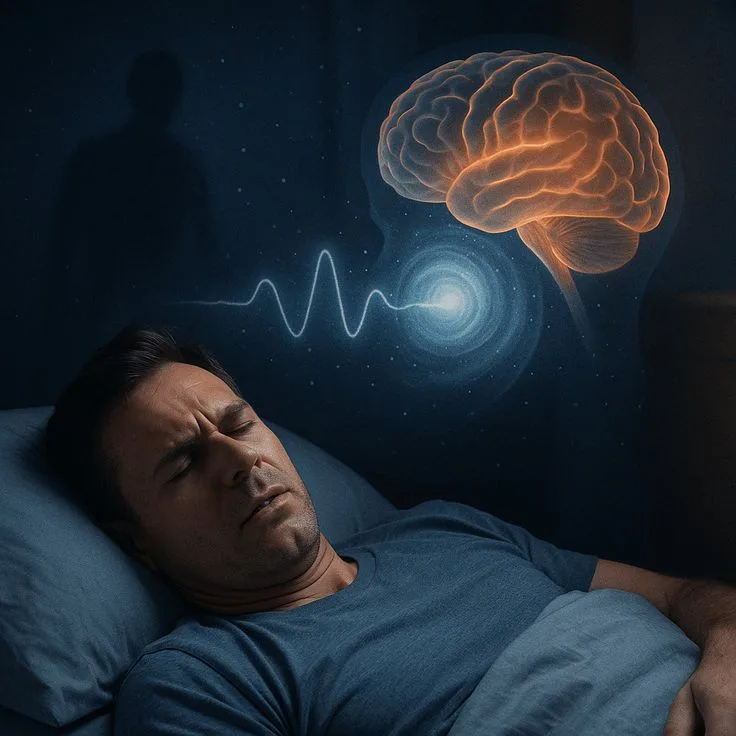
Why Taking Care of Your Mental Health Matters More Than You Think ?
Most people would not ignore a broken bone. They would not push through a chest infection without treatment, dismiss a kidney problem as weakness, or tell someone with appendicitis to just think positive. And yet every day, millions of people do exactly this with their mental health. They push through depression. They normalize anxiety so severe it affects every decision they make. They tell themselves that what they are feeling is not serious enough to address, that other people have it worse, that they should be able to handle it on their own.
Mental health matters in the same way physical health does, and the separation between the two has always been artificial. Your brain is an organ. When it is struggling, the effects show up everywhere: in your relationships, your work, your sleep, your immune system, your ability to feel joy. Taking care of your mental health is not a luxury or a sign of fragility. It is one of the most practical, highest-impact things you can do for the quality of your life.
This post explores why mental health is important in ways that go beyond what most awareness campaigns cover, what happens when it is neglected, and what taking care of mental health actually looks like in real daily life.
Mental Health Is Not the Absence of Illness
One of the most persistent misconceptions about mental health is that it only becomes relevant when something is seriously wrong. In this view, mental health is about diagnosable conditions, and if you do not have a diagnosis, your mental health is fine. This is a bit like saying your physical health only matters when you have a disease. The reality is more nuanced and more useful.
The World Health Organization defines mental health as a state of well-being in which a person realizes their own potential, can cope with the normal stresses of life, can work productively, and can contribute to their community. By that definition, mental health is not a binary. It is a spectrum, and where you sit on that spectrum on any given day affects virtually everything about how you experience your life. Mental health awareness starts with understanding this distinction. You do not need to be in crisis for your mental health to deserve attention.
Just as a person can eat well and exercise not because they are sick but because they want to feel and function well, mental health self care is a daily practice, not an emergency response.

The Deep Connection Between Mental and Physical Health
The mental health and physical health connection is one of the most well-documented findings in modern medicine, and it is still one of the most underappreciated in everyday conversation. The mind and body are not separate systems. They are deeply and continuously influencing each other, and the quality of one directly shapes the quality of the other.
What Chronic Stress Does to the Body
Stress and mental health are linked in ways that have concrete physical consequences. When you experience psychological stress, your body releases cortisol, the primary stress hormone. Short-term cortisol release is healthy and adaptive. Chronic cortisol elevation, which happens when mental distress goes unaddressed over weeks, months, or years, is a different matter entirely. It suppresses immune function, disrupts sleep architecture, raises blood pressure, promotes inflammation, impairs memory and concentration, and increases the risk of cardiovascular disease.
A landmark study published in the journal Psychosomatic Medicine tracked thousands of adults over 20 years and found that people with high levels of psychological distress had significantly higher rates of premature death from heart disease and cancer, even after controlling for lifestyle factors like smoking and diet. Neglecting your mental health is not just an emotional cost. It is a physical one with measurable consequences over time.
Mental Health and Immune Function
Research from Carnegie Mellon University found that people who reported higher levels of positive emotional wellbeing were significantly less likely to develop a cold when exposed to the rhinovirus, even controlling for sleep, exercise, and diet. This is not a small or fringe finding. It represents a growing body of evidence that emotional wellbeing has direct and measurable effects on how effectively the immune system functions. Taking care of your mental health, in other words, is one way of taking care of your body.
What Happens When Mental Health Goes Unaddressed
Understanding the cost of neglect is one of the most compelling reasons why mental health matters. The signs of poor mental health rarely announce themselves dramatically. More often they accumulate quietly, showing up as irritability that strains relationships, concentration problems that affect work performance, physical fatigue with no medical explanation, and a gradual narrowing of the things that used to bring pleasure or meaning.

The Relationship Cost
Mental health has a relational dimension that is easy to underestimate. When a person is struggling and not getting support, the distress does not stay contained inside them. It comes out in how they communicate, how they respond to conflict, how much emotional bandwidth they have for the people they love, and how capable they feel of being present in the moments that matter. Untreated depression or anxiety does not just affect the person experiencing it. It shapes every relationship around them.
Conversely, addressing mental health consistently produces improvements in how people show up for others. When you are not running on empty emotionally, you listen better, react less impulsively, repair conflict more easily, and bring something real to your relationships rather than just surviving them.
The Professional and Financial Cost
The economic cost of poor mental health is substantial enough that governments and corporations have begun paying attention for purely practical reasons. The World Health Organization estimates that depression and anxiety cost the global economy 1 trillion dollars per year in lost productivity. On an individual level, unaddressed mental health struggles translate to more sick days, reduced concentration, difficulty with decision-making, impaired creativity, and in more severe cases, an inability to maintain employment at all. Mental health stigma compounds this by making people reluctant to seek help until the situation has deteriorated significantly. Earlier intervention is consistently more effective and less costly, both personally and economically, than waiting until a crisis forces the issue.
Signs of Poor Mental Health That Are Easy to Miss
Because signs of poor mental health often develop gradually and because many of them overlap with things that are socially normalized, such as being busy, tired, or stressed, they frequently go unrecognized until they have been present for a long time. Knowing what to look for changes that.
- Persistent fatigue that sleep does not resolve, often linked to the cognitive load of unprocessed emotional distress.
- Difficulty making decisions, even small ones, because anxiety or depression reduces the brain’s executive function capacity.
- Withdrawing from people or activities that were previously enjoyable, a common early sign of both depression and burnout.
- Increased irritability or emotional reactivity, particularly in people who do not normally present this way.
- Physical symptoms with no clear medical explanation, including headaches, digestive problems, and chest tightness.
- A sense of numbness or disconnection from your own life, sometimes described as going through the motions without any real engagement.
- Sleep changes, either sleeping far more than usual or experiencing persistent insomnia, both of which are closely associated with mental health shifts.
None of these signs require a person to be in crisis for them to be worth taking seriously. They are signals from a system that is under strain, and they respond well to attention given early.
What Taking Care of Mental Health Actually Looks Like
Mental health self care is not a bubble bath and a scented candle, though there is nothing wrong with either. At its core, it is about building a life that supports psychological sustainability. That means attending to basic physical needs because they underpin everything else, building relationships that are genuinely nourishing, developing a relationship with your own emotional experience that is honest rather than avoidant, and knowing when to bring in professional support.
The Basics That Are Not Actually Basic
Sleep, physical movement, and nutrition are the foundation of how to improve mental health, not because they cure serious conditions but because their absence makes everything worse. Sleep deprivation directly impairs emotional regulation, making people more reactive, less resilient, and more vulnerable to anxiety. Regular physical activity produces measurable reductions in depression symptoms through multiple mechanisms, including endorphin release, cortisol regulation, and the sense of self-efficacy that comes from doing something physically demanding. These are not small effects.
Mindfulness and the Practice of Noticing
Mindfulness for mental health has accumulated enough research support that it has moved from alternative practice to mainstream clinical tool. Mindfulness-based interventions have demonstrated effectiveness for anxiety, depression, stress, and even chronic pain management. At its most practical, mindfulness simply means developing the habit of noticing what is happening inside you with some degree of curiosity rather than judgment. That habit, built consistently over time, changes the relationship a person has with their own emotional experience in ways that reduce suffering and increase resilience.
Knowing When Professional Support Is the Right Move
Therapy benefits extend well beyond crisis management. Many people who engage with therapy are not in acute distress. They are people who want to understand themselves better, navigate a difficult period more effectively, or build specific skills for managing stress and relationships. The idea that therapy is only for people who are severely unwell is one of the most limiting aspects of mental health stigma, and it keeps many people from accessing something genuinely useful.
If your emotional state is consistently affecting your sleep, your relationships, your work, or your sense of self, that is a reasonable threshold for seeking professional support. You do not need to reach a crisis point first. Earlier is better, and the research on this is consistent.
This Is Worth Your Attention
Mental health matters not because it is fashionable to say so, but because it is true in the most literal sense. It shapes how you think, how you feel, how your body functions, how your relationships go, and what you are able to build with the time you have. Neglecting it has real costs that accumulate quietly until they become impossible to ignore.
Taking care of your mental health does not require a dramatic overhaul of your life. It starts with honesty about how you are actually doing, attention to the basics that make everything else possible, and the willingness to ask for help before things become serious. Mental health awareness without action is just knowledge. The part that changes lives is what you do with it.
If this resonated with you, share it with someone who needs to read it. And if you have been sitting on the idea of speaking to a professional, consider this your nudge to follow through. It is one of the better decisions you can make for yourself.