
The Biggest Danger to Your Mental Health (No One Talks About)
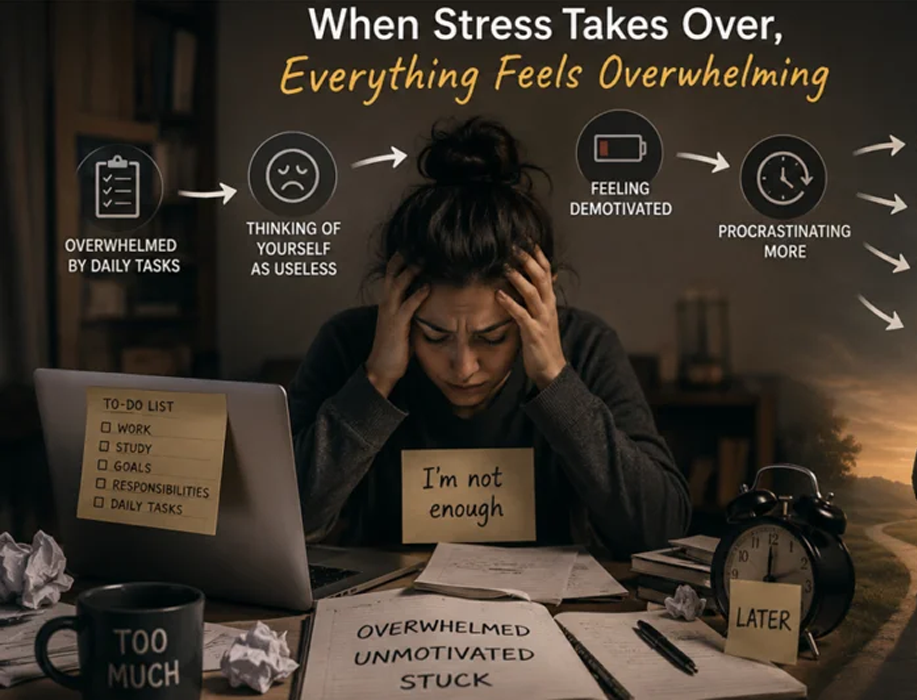
When you’re already stressed, no matter the reason, even the simplest daily tasks can start to feel overwhelming. Things that once felt routine suddenly require extra effort. Getting out of bed, completing small tasks, or working toward your goals begins to feel heavy. In those moments, it’s easy to fall into a cycle of negative thoughts, questioning your abilities, thinking of yourself as useless, and feeling a deep sense of demotivation.
As this feeling grows, procrastination often follows. You delay tasks not because you don’t care, but because everything feels like too much at once. Slowly, this doesn’t just affect your productivity; it begins to shape your mood. You may feel more irritable, anxious, or emotionally drained. Over time, it can impact your relationships, creating distance or misunderstandings with the people around you.
If this sounds like you, then this blog is definitely for you.
7 Daily Time Management Habits for a Stress-Free Life
Feeling constantly rushed, overwhelmed, or mentally drained? You’re not alone. Poor time management doesn’t just hurt productivity; it quietly damages your mental health. The good news is that small, consistent habits can help you regain control and create a calmer, more balanced life.
Here are 7 daily time management habits that can reduce stress and improve your mental well-being.
1. Start Your Day with a Clear Plan
Instead of jumping straight into work, take 10 minutes each morning to outline your top priorities. Focus on 3–5 key tasks, not a long, overwhelming list. This gives your day direction and reduces decision fatigue.
2. Use Time Blocking
Divide your day into focused blocks for specific tasks. For example, 9–11 AM for deep work, 11–12 PM for emails. This prevents multitasking and improves focus.
3. Follow the 80/20 Rule
Not all tasks are equal. Identify the 20% of tasks that bring 80% of results and prioritize them. This helps you work smarter, not harder.
4. Take Regular Breaks
Working nonstop leads to burnout. Try the Pomodoro technique, 25 minutes of work followed by a 5-minute break. It refreshes your mind and maintains productivity.
5. Learn to Say “No“
Overcommitting is a major cause of stress. Protect your time by setting boundaries and declining tasks that don’t align with your priorities.
6. Limit Digital Distractions
Constant notifications drain your focus. Turn off unnecessary alerts and schedule specific times to check your phone or email.
7. End Your Day with Reflection
Spend a few minutes reviewing what you accomplished. This builds a sense of progress and helps you plan better for the next day.
Now, let’s fight anxiety caused by poor time management:
How to manage time when you are burned out
When you’re burned out, traditional productivity advice often makes things worse. The key is not to push harder, but to slow down strategically.
Start by lowering your expectations. Focus only on essential tasks and give yourself permission to do less. Break tasks into very small steps so they feel manageable. Even completing one small task can rebuild momentum.
Rest is not a reward, it’s a requirement. Schedule recovery time just like you schedule work. This could be a short walk, deep breathing, or simply doing nothing for a few minutes.
Also, avoid trying to “catch up” on everything at once. Burnout is often a result of prolonged overload, so recovery requires patience. Gradually rebuild your routine instead of forcing productivity.
How to stop feeling overwhelmed by my to-do list?
A long to-do list can feel paralyzing. The problem isn’t always the number of tasks; it’s how they are presented.
Start by doing a “brain dump.” Write everything down, then organize tasks into categories: urgent, important, and optional. This helps you see what truly needs attention.
Next, apply the “Rule of 3.” Choose only three main tasks for the day. This makes your workload feel achievable and reduces anxiety.
Another powerful trick is to turn vague tasks into clear actions. Instead of writing “work on project,” write “complete first draft of introduction.” Clarity reduces mental resistance.
Finally, accept that you won’t finish everything, and that’s okay. Progress matters more than perfection.
What makes you feel you never have enough time?
This feeling is often linked to what experts call “time poverty”, the constant sense that there’s never enough time, no matter how much you do.
It usually comes from overcommitment, lack of prioritization, and unrealistic expectations. When everything feels urgent, your brain stays in a constant state of stress.
Another reason is mental clutter. Even when you’re not working, your mind is thinking about unfinished tasks. This creates the illusion of being busy all the time.
To fix this, start by tracking how you actually spend your time. You might discover hidden time drains like excessive scrolling or unplanned interruptions.
More importantly, redefine productivity. Being busy is not the same as being effective. When you focus on meaningful tasks instead of constant activity, time starts to feel more abundant.
How can you manage time to prevent anxiety?
Time management is one of the most effective tools to reduce anxiety when done correctly.
First, create structure in your day. A predictable routine reduces uncertainty, which is a major trigger for anxiety.
Second, build buffer time between tasks. Packing your schedule too tightly leaves no room for delays, increasing stress. Give yourself breathing space.
Third, prioritize self-care as a non-negotiable. Sleep, exercise, and relaxation are not optional; they directly impact your ability to handle stress.
Fourth, focus on one task at a time. Multitasking increases mental load and reduces efficiency, making you feel more overwhelmed.
Lastly, practice letting go. Not everything needs to be perfect or completed immediately. Sometimes, managing your time well means accepting your limits.
Techniques for Focus and Productivity
What is the Pomodoro technique for mental health?
The Pomodoro technique is a simple yet powerful method to improve focus and reduce mental fatigue. It involves working in short, focused bursts, typically 25 minutes, followed by a 5-minute break. After four cycles, you take a longer break. This approach works well for mental health because it prevents burnout, keeps your brain fresh, and makes large tasks feel more manageable. Instead of dreading hours of work, you only commit to 25 minutes at a time.
How to stop procrastinating due to anxiety:
Procrastination often isn’t laziness; it’s avoidance driven by anxiety. To break this cycle, start with the smallest possible step. If a task feels overwhelming, reduce it to something you can complete in 5 minutes. This builds momentum and lowers resistance. Pair this with self-compassion; being harsh on yourself only increases anxiety and delays action further.
How to use the Eisenhower Matrix for prioritizing tasks:
The Eisenhower Matrix helps you organize tasks into four categories: urgent and important, important but not urgent, urgent but not important, and neither. This method allows you to focus on what truly matters instead of reacting to everything. By prioritizing effectively, you reduce stress and gain a clearer sense of control over your time.
What is the 3-3-3 rule for anxiety?
The 3-3-3 rule is a grounding technique used to calm anxiety. You identify three things you can see, three things you can hear, and move three parts of your body. This simple exercise brings your attention back to the present moment, helping you regain control when your thoughts feel overwhelming.
Work-Life Balance and Self-Care
How to schedule time for self-care:
Self-care should be treated as a priority, not an afterthought. Schedule it into your calendar just like any other task. Whether it’s exercise, reading, or relaxation, these moments recharge your energy and improve productivity in the long run.
How to say “no” to overcommitting:
Saying no is essential for protecting your mental health. Be polite but firm. You don’t need long explanations; simply state that your schedule is full. Setting limits allows you to focus on what truly matters without feeling overwhelmed.
How to set boundaries at work to protect your mental health:
Clear boundaries prevent work from taking over your life. Set defined working hours, avoid checking emails after hours, and communicate your limits with colleagues. Boundaries create a healthier, more sustainable work routine.
How to stop working or worrying about work in the evening:
Create a shutdown ritual at the end of your workday. Review tasks, plan for tomorrow, and then mentally “close” work. Engaging in relaxing activities like walking or spending time with family helps shift your focus away from work.
Mental Health and ADHD/Neurodivergence
How to manage time with ADHD?
Time management with ADHD requires structure and flexibility. Use visual timers, reminders, and short work sessions. Breaking tasks into smaller steps makes them less overwhelming and easier to start.
Why do I feel paralyzed instead of starting tasks?
This feeling is often linked to executive dysfunction, where the brain struggles to initiate tasks. Reducing the task size and removing pressure can help you get started without feeling stuck.
At last, there is a great tip for you:
Time management tips for depression:
When dealing with depression, even small tasks can feel heavy. Focus on tiny, achievable actions, like making your bed or replying to one email. Progress, no matter how small, builds momentum and improves your mental state over time.
Time management isn’t about squeezing more into your day; it’s about creating space for what truly matters. When you manage your time intentionally, you don’t just become more productive, you become calmer, clearer, and more in control of your life.